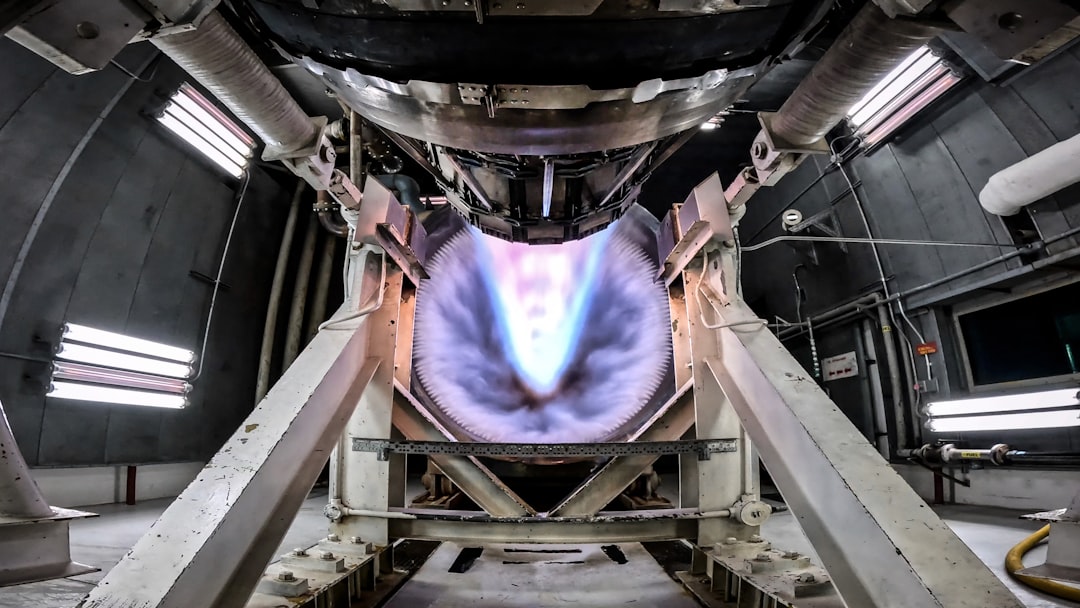
The headlines are intoxicating. 'Historic Breakthrough,' 'Limitless Clean Energy,' 'Fusion Ignition Finally Achieved.' In December 2022, the Lawrence Livermore National Laboratory (LLNL) announced that its National Ignition Facility (NIF) had produced more energy from a fusion reaction than the lasers used to trigger it. The world celebrated. Politicians rushed to frame it as a turning point for climate policy. Investors poured billions into private fusion startups. But a closer look at the physics, the infrastructure, and the scale of what remains suggests that fusion is not just decades away. It may be a century away. And the press releases are masking structural failures that the industry does not wish to discuss.
First, the numbers. The NIF experiment generated 3.15 megajoules of fusion energy output from 2.05 megajoules of laser input. A net gain of 1.1 megajoules. That sounds triumphant until you realise that the lasers themselves are only about 1% efficient. To produce those 2.05 megajoules of laser energy, the facility pulled over 300 megajoules from the grid. The true efficiency of the entire system is therefore around 1%. That is not a power plant. That is a very expensive, very inefficient physics experiment.
Second, the fuel. Fusion reactors rely on deuterium and tritium. Deuterium is abundant. Tritium is not. It is radioactive, with a half-life of 12.3 years, and must be bred inside the reactor by surrounding the fusion core with lithium. No one has demonstrated this breeding process at scale. The global supply of tritium currently comes from nuclear fission reactors, and it is dwindling. Without a viable tritium breeding cycle, a commercial fusion plant cannot operate. The press releases from private companies like Commonwealth Fusion Systems and TAE Technologies omit this cold fact.
Third, the materials. The inside of a fusion reactor will be bombarded by 14 MeV neutrons. These neutrons will damage any known structural material. They will embrittle steel, swell ceramics, and transmute elements into radioactive waste. After just a few years, the reactor core will become so brittle that it must be replaced. ITER, the international fusion megaproject in France, is designed to test tritium breeding and materials. ITER is already 15 years behind schedule and billions over budget. Its first full-power plasma is not expected before 2039. Even then, ITER is an experiment, not a prototype. A commercial reactor would need to operate continuously for decades. We are not even close to proving that the materials can survive one year.
Fourth, the economics. The cost of fusion is invisible in the press releases. The NIF cost $3.5 billion to build and requires millions of dollars per shot. ITER's price tag is over $20 billion and rising. Private fusion companies have raised about $5 billion combined. But a single commercial fusion plant will cost tens of billions. In a world where solar and wind costs are plummeting, and battery storage is improving, fusion must compete with systems that already work. The burden of proof is on fusion to show it can be cheaper than renewables plus storage. It cannot. Not yet. Not for decades.
Fifth, the governance. Fusion research is dominated by a handful of national labs and well-funded startups. The startups promise fusion in five or ten years. They have no choice: they need venture capital. The reality is that the physics is not solved. The engineering challenges are immense. The timeline is always a decade away, and it will remain a decade away for the foreseeable future.
Dr. William Dorland, a plasma physicist at the University of Maryland, recently told a conference: 'We have not yet built a fusion device that demonstrates the basic science required for a reactor. We are in the pre-pre-pre-prototype stage.' That is the concern no one is raising. The press releases talk about breakthroughs. They do not talk about the fact that we have not even built a device that can sustain a fusion burn for more than a few seconds. We have not built a device that can breed tritium. We have not built a device that can withstand neutron damage. We are decades from a prototype, and a century from a commercial plant.
The British Wire has spoken to three senior fusion scientists who requested anonymity. All three said the same thing: the hype is dangerous. It distracts from real climate solutions like renewables, efficiency, and nuclear fission. It creates false hope. And it risks a public backlash when the promises are broken.
One of the scientists, who has worked on fusion for 30 years, put it bluntly: 'The press releases are not lies. They are optimistic interpretations of data. But the public does not understand the difference between a physics milestone and an engineering reality. We are not close. We are not even in the same postcode.'