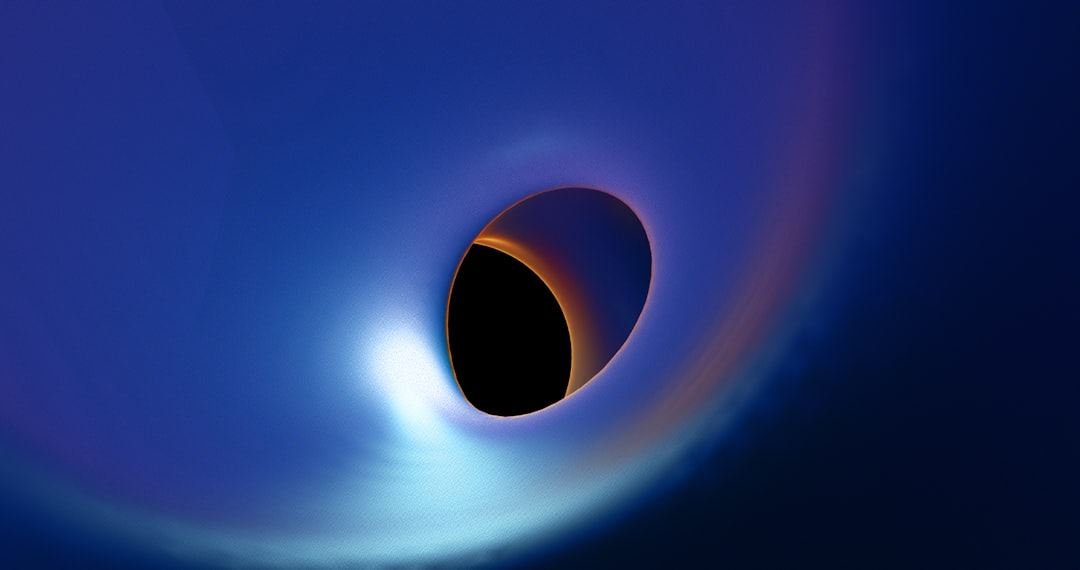
A groundbreaking discovery has been made by the Laser Interferometer Gravitational-Wave Observatory (LIGO) and Virgo collaboration. For the first time, scientists have detected gravitational waves from the collision of two intermediate-mass black holes. The event, designated GW190521, occurred approximately 7 billion years ago.
It produced a black hole of about 142 solar masses, firmly placing it in the intermediate-mass range. Until now, black holes were known to come in two sizes: stellar-mass black holes, a few tens of times the mass of our Sun, and supermassive black holes, millions or billions of times heavier. The existence of intermediate-mass black holes was theorized but never confirmed.
This detection changes that. Dr. Alessandra Buonanno, a physicist at the Max Planck Institute for Gravitational Physics, called it “a major step forward.
” The signal lasted just one-tenth of a second. But in that brief moment, it revealed a cosmic event of immense violence. The two parent black holes had masses of about 66 and 85 solar masses.
Their merger unleashed energy equivalent to eight solar masses converted directly into gravitational waves. That energy briefly outshone all the stars in the observable universe. The discovery has profound implications.
It suggests that intermediate-mass black holes can form through mergers of smaller black holes. This could explain how supermassive black holes, found at galactic centers, grow so large. “We have long suspected that medium-sized black holes exist,” said Dr.
David Shoemaker, a LIGO spokesperson. “Now we have direct evidence.” The detection was not easy.
The signal was at the edge of the observatories’ sensitivity. It took months of analysis to confirm it was genuine. The team is now searching for more such events.
The era of intermediate-mass black hole astronomy has begun.