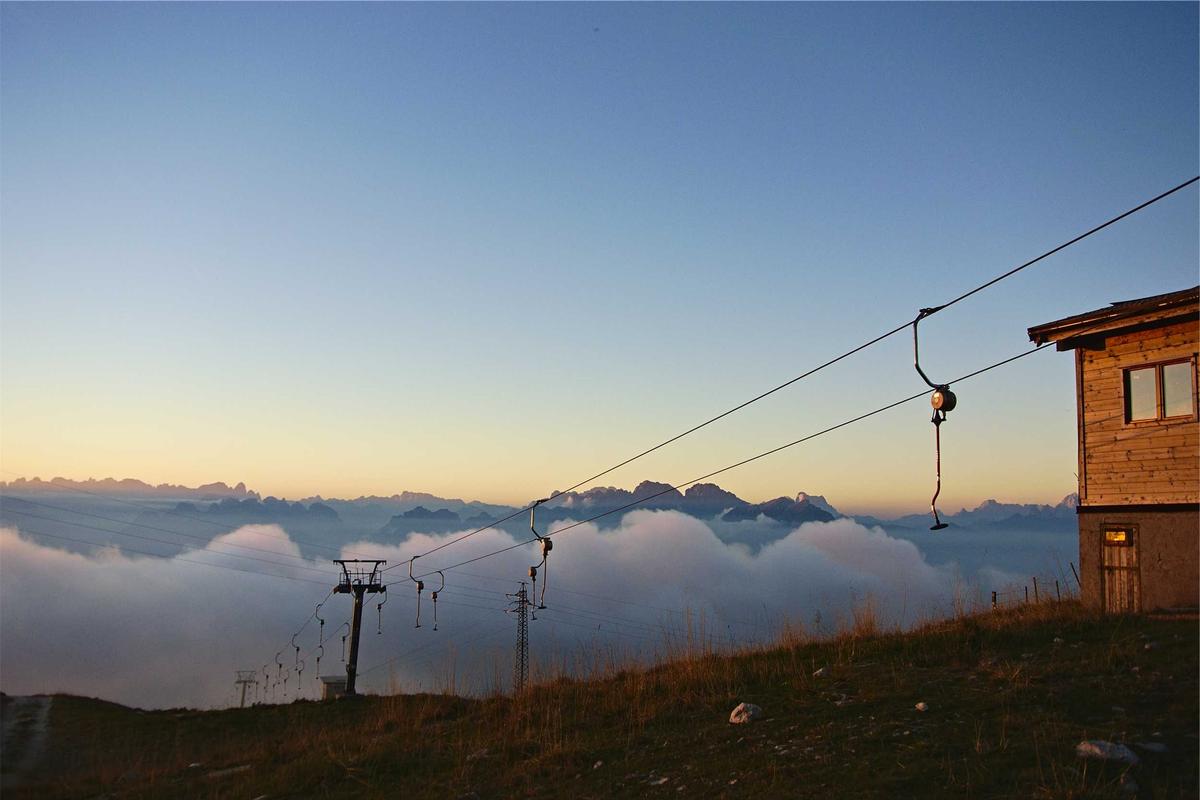
A seismic shift in global resource dynamics has been detected beneath the rugged peat bogs of the Scottish Highlands. Geologists from the British Geological Survey have confirmed the discovery of a substantial deposit of rare earth elements, the lifeblood of modern technology, stretching across the Grampian region. This finding could redraw the map of digital sovereignty, challenging China's stranglehold on the supply chain that powers everything from your smartphone to electric vehicle motors.
The deposit, estimated to contain over 10 million tonnes of oxides including neodymium, dysprosium, and praseodymium, was uncovered during a routine environmental survey for a proposed wind farm. ‘We were looking for lithium in geothermal brines,’ said Dr. Alistair MacKenzie, the lead geologist on the project. ‘What we found instead was a geological jackpot.’ The extraction potential is significant enough to meet the UK's domestic demand for the next three decades, according to initial assessments.
For the tech industry, this is a watershed moment. Rare earths are the unseen infrastructure of the digital age: they enable the miniaturisation of hard drives, the luminosity of screens, and the efficiency of electric motors. Yet 60% of global production remains concentrated in China, with the rest scattered across politically volatile regions. The ethical implications of this dependence have haunted Silicon Valley for years. Now, a domestic source offers a path towards ethical sourcing, provided we navigate the environmental trade-offs.
The Scottish government is already framing the discovery as a cornerstone of a ‘green tech revolution’. But the user experience of this transition will be complex. Mining rare earths is notoriously dirty: the process involves crushing ore, leaching with acids, and separating elements via solvent extraction. Historically, tailings ponds have leaked into water tables, causing heavy metal contamination. However, new techniques such as bioleaching using bacteria to extract metals could reduce the ecological footprint. ‘We have a chance to do this right from the start,’ said Dr. MacKenzie. ‘But only if we treat the Highlands as a living system, not just a mine.’
The economic implications are equally profound. The UK currently imports the vast majority of its tech components; the discovery could spur domestic manufacturing of magnets, batteries, and semiconductor wafers. However, the expertise for processing these elements is largely held by Chinese firms. ‘We need to build a workforce skilled in applied mineralogy and advanced robotics,’ warned Dame Fiona Calder, a former advisor to the Ministry of Defence. ‘Otherwise, we'll just be digging holes and shipping ore to Shanghai for processing.’
For the local community, the news is met with a mix of optimism and anxiety. In the village of Ballater, the prospect of high-skilled jobs is a lifeline, but residents recall the scars left by previous boom-and-bust cycles in tin and copper mining. ‘We don't want a repeat of the 1980s,’ said hamish MacLeod, a crofter whose land sits above the deposit. ‘The tech crowd talks about “user experience”, but they forget that the Highlands are our home, not a data centre.’
On a geopolitical level, the discovery could disrupt the current order. China has already responded by tightening export quotas on rare earths, a move that caused prices to spike 30% overnight. The EU is watching closely, as the Scottish deposit could bolster the bloc's Critical Raw Materials Act. ‘This is a chance to break the cycle of technological colonialism,’ said Dr. Henrik Olsen, a geopolitical analyst at Chatham House. ‘But it requires foresight, not just extraction.’
As we stand on the precipice of this new era, the critical question remains: will we treat this as a resource to be exploited for short-term profit, or as a foundation for a more equitable digital future? The answer lies not in the ore itself, but in the algorithms of governance we choose to write. For now, the Highlands hold both treasure and fragility, and the world watches.