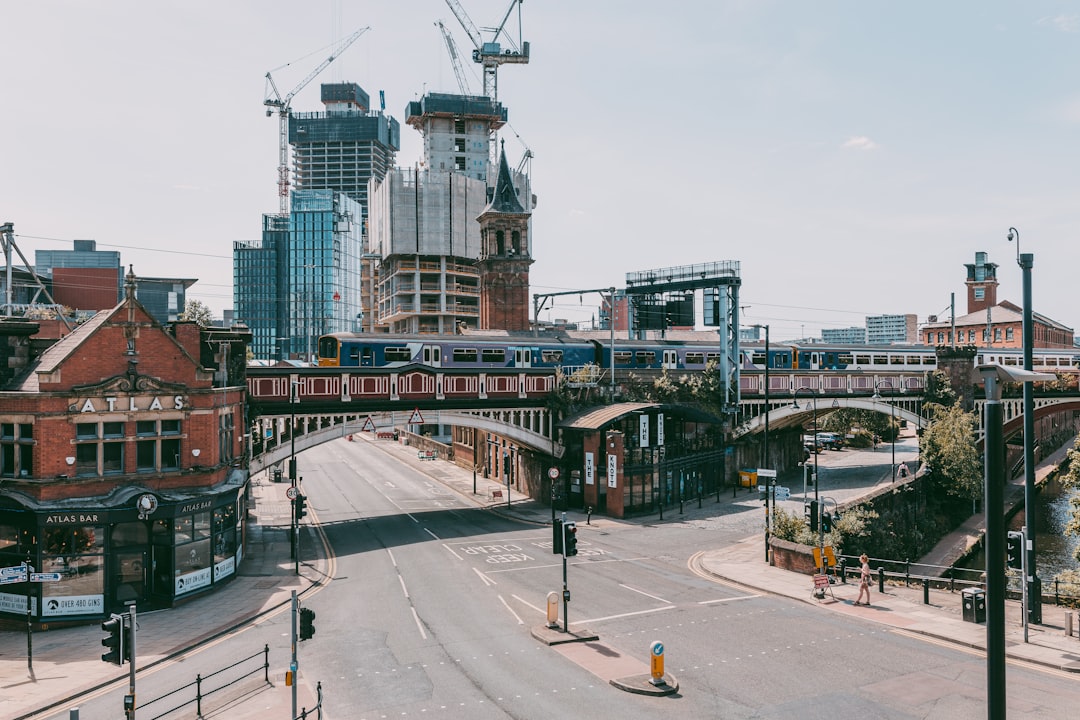
Manchester is set to become the UK’s first fully connected 6G smart city by 2027, a move that promises lightning-fast internet, autonomous transport, and AI-driven public services. But behind the gleaming facade of this technological leap lie unresolved questions about privacy, cost, and who really benefits.
The city council has greenlit a partnership with telecom giants Vodafone and Huawei, despite ongoing security debates surrounding the Chinese firm. The project, dubbed “Manchester 6G”, will see thousands of sensors embedded in lampposts, traffic lights, and even rubbish bins. These devices will transmit data in real time, managing everything from energy use to crime prevention.
“We are building a nervous system for the city,” said Dr. Eleanor Graves, the council’s digital strategy lead. “Traffic jams will be eliminated. Air quality will be monitored second by second. Streetlights will dim when no one is around. This is efficiency on steroids.”
Critics, however, are less enthusiastic. The digital rights group Big Brother Watch has flagged concerns about mass surveillance. “Smart lampposts are spy posts,” said campaigner James Taylor. “They can track your phone, your movement, your habits. Who owns that data? How long is it stored? The council hasn’t been straight with us.”
The city insists data will be anonymised and encrypted. But privacy campaigners remain unconvinced, pointing to a public consultation that drew just 600 responses from a population of over half a million.
There are also questions about cost. The initial investment is £150 million, with a further £50 million annual running cost. The city hopes to recoup this through savings in energy and transport, and by selling data insights to private companies. “This is a risky gamble,” said local economist Professor Amita Sharma. “If the efficiency gains don’t materialise, the council might have to cut essential services like social care to pay the bill.”
Small businesses worry about being pushed out. “The 6G network will prioritise autonomous vehicles and big delivery bots,” said Sarah Jenkins, owner of a local café. “What about the cyclist, the pedestrian, the little shop? We’re being shoehorned into a tech vision we never voted for.”
The council counters that 6G will create jobs and attract investment. But some residents question who the city is for. “They’re building a playground for tech bros and Amazon drones,” said Mike O’Malley, a community organiser in Moss Side. “Meanwhile, our buses are still late and the potholes swallow your wheels. It feels like a distraction.”
Manchester’s ambition cannot be denied. It aims to be the UK’s most advanced digital city, leapfrogging London and Bristol. But the pace of change has left many feeling left behind. Public meetings have been sparsely attended, with jargon-filled presentations alienating ordinary residents.
The council promises transparency and a “citizen’s board” to oversee the project. But critics say this is window dressing. “The contracts are already signed with telecoms giants,” said Taylor. “They own the infrastructure. We just pay the price.”
As the first 6G antennas are erected on the Manchester skyline, the city stands at a crossroads. One path leads to a streamlined, efficient future. The other leads to a surveillance state where privacy is a luxury. The question is who gets to decide.